
Recent Articles
Tired of discourse
·5 mins
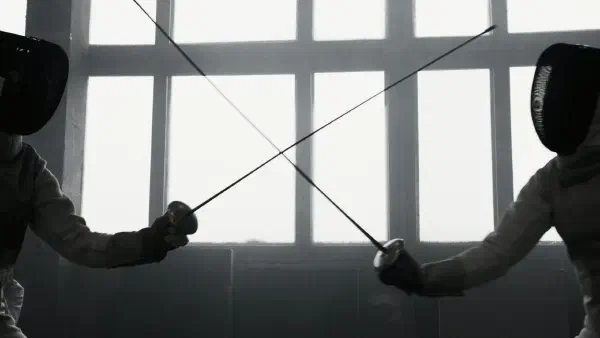
On the longing for rational exchange in an irrational world # There is a certain type of discussion that tires me. Not because I lack arguments, but because they seem to have no effect. I’m not talking about different opinions, but about conversations in which rationality and fair argumentation hardly play a role anymore. These are conversations that are more about being right than about gaining insight, in which language becomes a weapon rather than a tool.

Information security is not an IT issue – it is a corporate responsibility
A call after the worst-case scenario # A company calls. Ransomware. Production has come to a standstill. The first question: “How could this happen?” A better question would have been: “Why didn’t we do anything about it before?”
Many companies still treat information security as a chore – something you do because you have to. It is regrettable that regulatory pressure is often needed to make this happen, but given human weaknesses in dealing with statistics and risk, it is hardly surprising.

Inheritance, inequality, and the price of birth
·10 mins
Introduction: Hägglund’s critique of time and its limitations # Martin Hägglund’s This Life got me thinking with its fundamental ethical critique of capitalism. His central thesis: our lifetime is our most precious asset, and yet in the capitalist system it is put to work, controlled by others, exploited. We work more efficiently, more productively—and yet we do not get this time back. It flows into profits, not into freedom.
The end of authenticity – Why products no longer have a soul
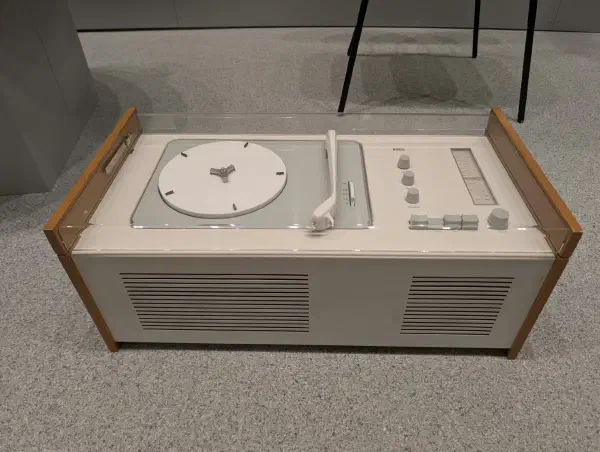
An essay on the quiet disappearance of cultural design and the “race to the bottom” Introduction: When products still told stories # There was a time when you could tell where a product came from just by looking at it. Italian cars were beautiful, eccentric, often unreliable, but full of charm. Japanese cameras were minimalist, pragmatic, precise. German kitchen appliances were heavy, robust, and functional. Products were ambassadors of origin and attitude. They bore a signature, a cultural semantics, sometimes even an ethic. A toaster could be “German.” A radio could seem Italian. A camera from Japan not only had functions, but also an implicit value proposition.

Freedom Without Choice
Why moral judgment is possible (and necessary) without free will Introduction # In a world where political outrage, moral sensitivities and mutual recriminations dominate public discourse, the idea that no one is really ‘at fault’ seems radical. No politician, no criminal, no human being – not even Donald Trump. I subscribe to a harsh determinism: the idea that every thought, every feeling, every action is causally produced by preconditions. There is no free will in the metaphysical sense. And that is precisely why it is possible to treat people with deep empathy – without condemning them. But that does not mean we are defenceless.

When understanding isn’t enough: Stoic frustration in an irrational world
·7 mins
Introduction # There are days when I wonder if I am the problem. If it is narcissistic to keep asking myself why so many things around me are so obviously wrong. But the answer is no. It is not arrogance, but a painful attempt to survive in a world that does not understand itself. I understand the causes, the mechanisms, the psychological and social driving forces. And yet I am frustrated. Perhaps even because of this.