Introduction: When products still told stories#
There was a time when you could tell where a product came from just by looking at it. Italian cars were beautiful, eccentric, often unreliable, but full of charm. Japanese cameras were minimalist, pragmatic, precise. German kitchen appliances were heavy, robust, and functional. Products were ambassadors of origin and attitude. They bore a signature, a cultural semantics, sometimes even an ethic. A toaster could be “German.” A radio could seem Italian. A camera from Japan not only had functions, but also an implicit value proposition.
Today? At best, you can still tell if a product is from Apple. Everything else is uniform. Designed by anonymous design teams, manufactured in the same industrial zones, sold under interchangeable names. The result is a market in which consumers have little to go on—except price. And that reinforces a cynical trend: if everything looks the same anyway, why pay more?
From signature to licensed shell#
Brands such as AEG, Telefunken, Blaupunkt, Grundig and Thomson once stood for technical excellence, engineering prowess and durability. They became symbols of the German economic miracle and were the epitome of solidity and high standards. Today, they are nothing more than brand remnants, licensed to random OEMs that manufacture random products in random ways. An AEG vacuum cleaner has nothing to do with the original AEG company. A “Grundig” television is now produced somewhere in Turkey or China, with electronics from third-party suppliers and support provided as available.
The brand has degenerated into a graphic backdrop. A label for trust that no longer exists. What is particularly perfidious about this is that this trust is being deliberately exploited. The licensing strategy of many retail companies is based on the fact that older or technologically unsavoury customers instinctively associate the names “AEG” or “Telefunken” with former quality. It is a deliberate, downright predatory exploitation of the goodwill of past decades. No one explains that behind the supposedly familiar name there are now completely different structures, manufacturers, and responsibilities. The result is creeping disappointment – but only in individual cases. Because as soon as the damage becomes apparent, the brand has already been passed on or burned. The advertising power of the logo is exploited until the name is devalued – and then replaced by the next one that has not yet been used. It is the principle of the disposable brand.
Temu is not the problem – Temu is the system taken to its logical conclusion.#
When people complain about platforms like Temu today, they are right – but they often don’t look far enough. Temu is not the beginning, but the end point. It is the most consistent expression of a market that has spent decades doing everything it can to define itself by price. When “Made in Germany” eventually ceases to matter, the way will be clear for suppliers offering white box products with invented names like “AIOU,” “ZXTech,” or “HOMAX” for $3.99—with no support, no manufacturer liability, and no origin.
The responsibility? Disposable. The name? Disposable. The claim? Unimportant. It is no longer about trust, but about transaction optimization. Products are anonymized, brands are only used as visual triggers. No one expects quality anymore, just function at the lowest price.
The race to the bottom#
Temu is the market-driven end form of the so-called race to the bottom:
- Where product quality is just a cost factor,
- design is just a render graphic for marketing,
- support is a luxury,
- and consumer competence is seen as a hindrance.
However, this race was not started by China, but by Western brands themselves:
- Through outsourcing without any control mechanism,
- through the introduction of value lines that undermine quality standards,
- through planned obsolescence and non-repairable products,
- through the systematic training of consumers to adopt a bargain mentality.
There is another aspect to this: the dissolution of authorship. There is no longer a signature style, no signature. Design does not arise from attitude, but from compromise. Where once Dieter Rams or Ettore Sottsass stood for clarity and vision, today interdisciplinary teams work on the basis of A/B testing and target group analyses. The result is functional, pleasing—but lacking in character.
And the consumers? They have been trained to accept this. For decades. “Cheap is cool,” “more for less,” “top technology at low prices.” Who can still understand what a good product actually is? Even with premium suppliers such as Bosch, Miele, or Lenovo, you have to look closely today to see which segment you are buying—and whether the value still matches the name.
The loss of cultural depth#
What used to be taken for granted—a product as an expression of origin, aspiration, signature—is now exotic. And thus almost meaningless.
Examples?
- The Italian transistor radios of the 1960s—such as those made by Brionvega—were functional sculptures. They celebrated form, color, and material.
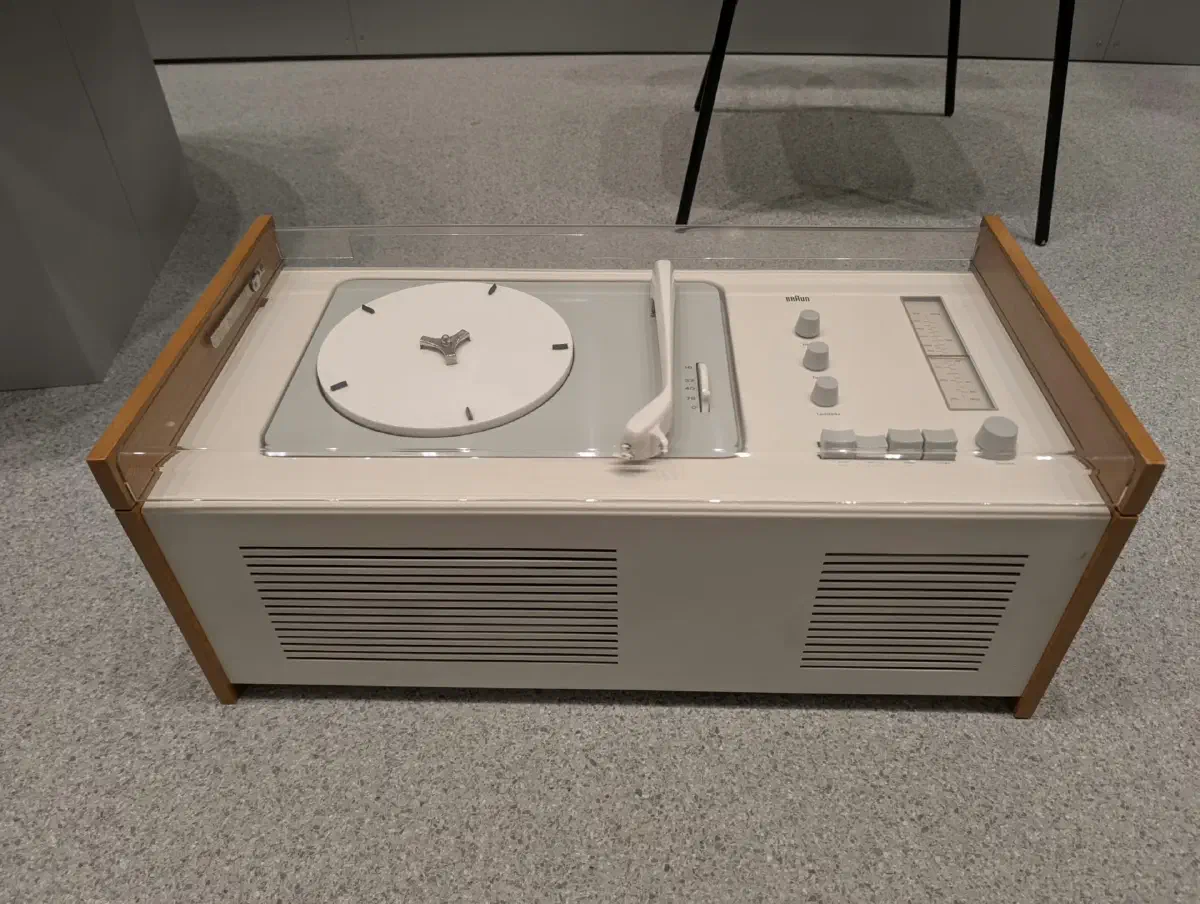
- A T3 portable radio by Dieter Rams for Braun was not a box, but an attitude. “Less, but better” was not an advertising slogan, but an ethos.
- A typewriter like the Valentine by Olivetti/Sottsass was not just a tool, but a political statement against gray practicality.
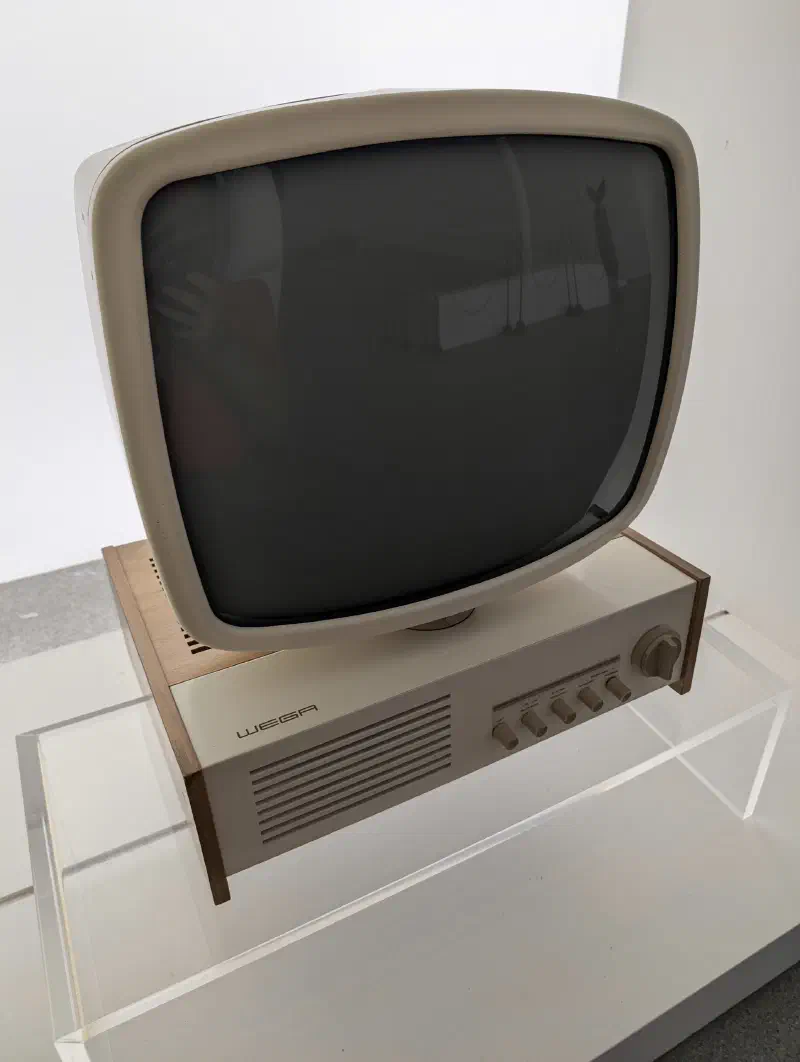
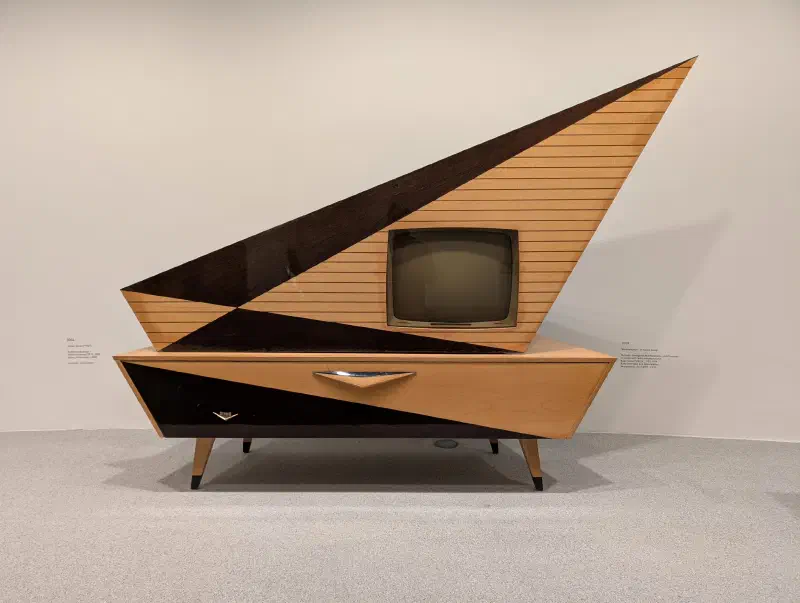
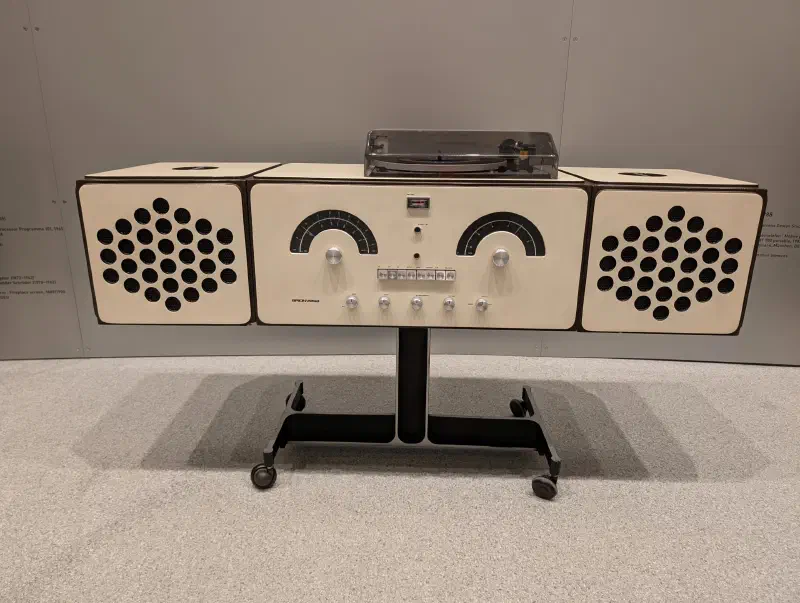
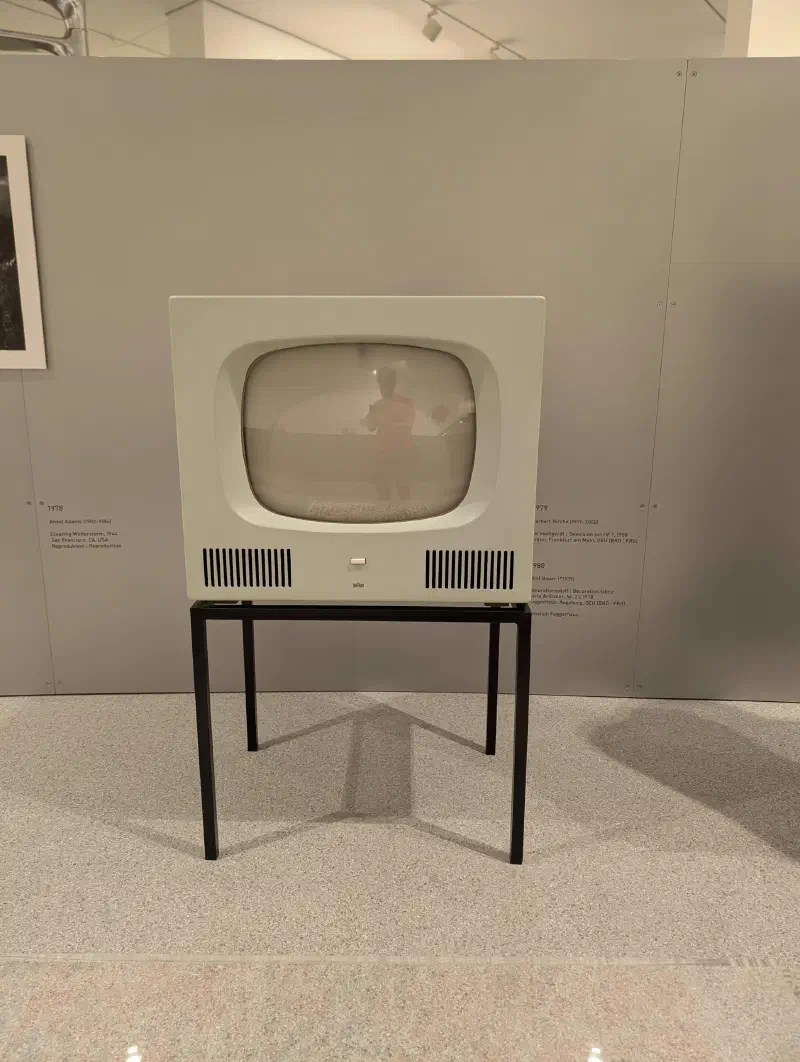
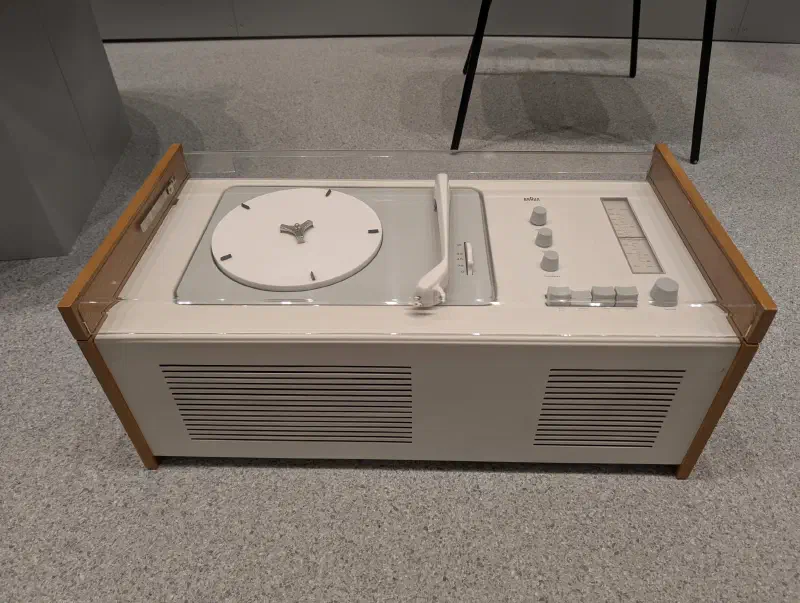
And today? A Bluetooth speaker is a black rubber sausage with USB-C. A vacuum cleaner is a battery-powered bone with LEDs. The “product world” has become a product backdrop. Everything works – but nothing tells a story anymore.
Is there a way out?#
Perhaps. But it won’t be easy, because it requires a radical rethink – and above all a political and economic honesty that is currently hard to find.
- Regulatory? The call for brand liability sounds obvious, but in reality it is often toothless. If the alleged manufacturer is based in Shenzhen, has no address that can be used to serve legal documents, and operates through a series of shell companies, even EU-wide labeling requirements are of little help. Legal recourse? Hardly enforceable in practice. The real market distortion remains.
- The real lever lies in externalized costs. If you take market logic seriously, it cannot only apply when it is convenient. A market can only be efficient if it prices in all costs. Currently, however, Western manufacturers bear the costs of electricity prices, CO2 certificates, environmental regulations, and labor laws, while imported cheap goods circumvent all of these. Those who defend market mechanisms must also work to ensure that they are not perverted by externalization. It is downright absurd that those who loudly proclaim themselves defenders of the free market are the very ones who tolerate or even actively promote these systemic imbalances. The market as it functions today is not free, but asymmetrically distorted—in favor of those who do not have to face up to their responsibilities.
- What is needed is CO2 and ethics pricing for imported goods, based on the standards we expect from domestic production. These include energy consumption, environmental pollution, occupational safety, and corporate responsibility. This is the only way to mitigate global competitive distortion.
- Protectionism? Yes—as a means of protecting fair competition. The term has historical baggage, but it is economically justifiable: Without at least a partial correction of the price distortions caused by global deregulation, any demand for quality, responsibility, and sustainability remains cynical. After all, comparing Temu with Miele is like comparing apples with asphalt. And here, too, the strategic short-sightedness is evident: while Western markets are being kept open with all possible means, China is systematically working to favor its own industry. Chinese companies receive subsidies, protective measures, strategic contracts – and market access is gradually being made more difficult for foreign suppliers. So what happens when the point is reached where Western companies lose the Chinese market – and at the same time have given away their home market to import dumping? The answer is simple: they disappear.
Final thought: A product as a cultural statement#
A product can be more than just a transaction. It can be an expression. A commitment. An object with a history. And in the best case scenario: a part of our cultural identity.
If we allow it. And if we have the courage to resist the cheapest offer.
Note: This article is intended as a critique of a system, not of individual consumers. The increasing disorientation in the market is not the “fault” of customers, but the result of a structural disconnect between design, origin, and responsibility. It is time to talk about this again.